Game Jam Context
What is a Game Jam?
A time based event where participants (mostly game developer) form teams and build a game from scratch in a limited time set. Here are some common formats.
| Event | Duration | Typical Team Size | Notes |
|---|---|---|---|
| Ludum Dare | 48-72h | Solo or 2-4 | Oldest online jam, post-mortems required |
| Global Game Jam | 48h | 2-5 | In-person sites worldwide |
| Game Off | 1 month | Any | GitHub-hosted, relaxed pace |
| Local / University Jams | 24-48h | 1-5 | Variable formats |
The 48h Constraint
A few restrictions make this different from most other projects:
- Tools have to be ready before the jam starts. Learning a new engine mid-jam is how you don’t finish.
- Theme drops at the start. You find out what you’re making when everyone else does.
- Scope has to fit the time. Not what you would like to build what, more what you can actually ship in 48 hours.
- Parallel work is capped by team size. With 1–5 people there is no one to cover a feature that runs over time, so anything that is not essential becomes a risk.
Common Pitfalls
The post-mortem analysis from Ludum Dare 36/37 showed 8 common anti-patterns that happend across different teams. They are documented in detail for you in the Practices section:
- Overthinking in concept phase
- Feature creep
- Late design decisions
- The pivot dilemma at hour 24
- Perfectionism
- No architecture planning
- Neglected tutorial and onboarding
- Decision by committee
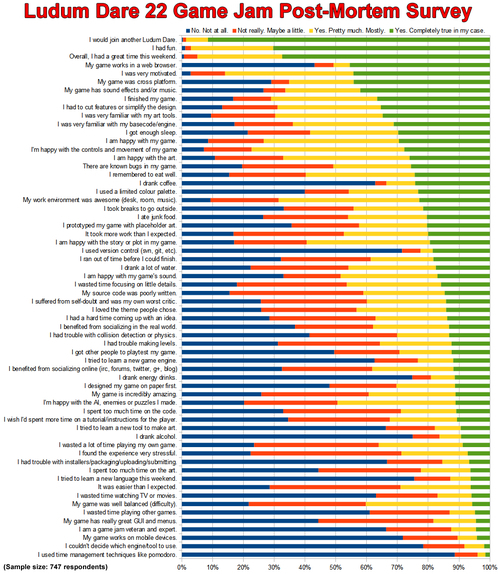
The survey data from earlier game jams shows these exact patterns are not even new. The same problems have happend consistent since Ludum Dare’s early years:
Post-Mortem Sources
For transparency all sources are listed here -> Where the data comes from But to give some credits for some post-mortems which helped a lot for the findings I list them here:
- Hyper Holomayhem (JorgeGameDev, LD37)
- One Room Hotel (TerraCottaFrog, LD37)
- One Room Factory (Zgragselus, LD37)
- Remote Operations Team (HuvaaKoodia, LD37)
- HourGlass Collector (skorpyo, LD37)
- Ludum Dare: The Game (DDRKirby, LD37)
- Colossorama (JorgeGameDev, LD36)
- Revenge of Tutankhamun, Burning Light, Tori Tori Panic (LD36)
What made these post-mortems useful ist that successful teams had the instict to apply methods without any formal training in those methods. That pattern is what this playbook is built on.